
Borrowing Capacity Australia 2026 — Why Lender Policy Matters More Than Most Borrowers Realise
Primary Keyword: Borrowing capacity 2026
Secondary Keywords: how much can I borrow Australia, borrowing power April 2026, lender policy Australia, mortgage approval strategy
Introduction
“How much can I borrow?” is still one of the most common questions Australian borrowers ask. But in April 2026, it is also one of the most misunderstood.
Many borrowers think borrowing capacity is determined by a single number generated by market rates. They assume that if rates stay high, borrowing capacity falls, and if rates come down, borrowing capacity rises. That is partly true — but it is not the full picture.
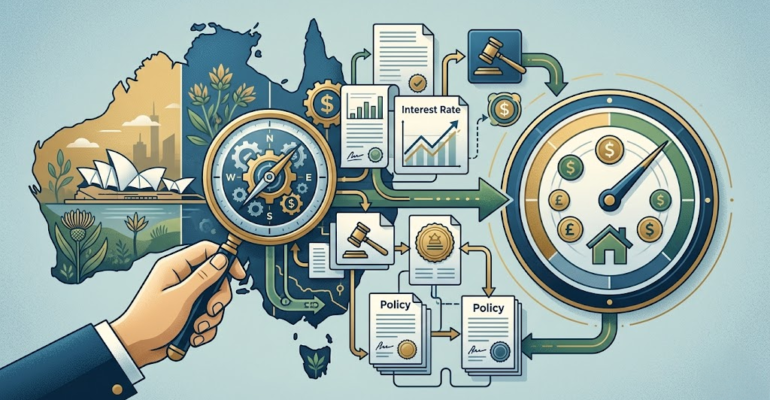
In reality, borrowing capacity is shaped by a combination of rates, lender policy, debt position, living expenses, credit conduct, income quality, and loan purpose. That means two borrowers with very similar incomes can receive very different outcomes depending on where and how they apply.
This matters enormously in the current market because small shifts in capacity can change what suburb you can buy in, what property type you can target, and whether your plan is viable now or needs to be reworked.
Why Borrowing Power Feels So Unpredictable
Borrowers are often shocked when one lender’s estimate differs meaningfully from another’s. But this happens all the time.
That is because lenders do not assess risk in exactly the same way. Some are more generous with overtime. Some shade rental income more heavily than others. Some are more conservative with self-employed earnings. Some treat bonuses, commissions, family benefits, or existing liabilities in ways that can materially change the result.
The result is that borrowing capacity is not a fixed universal figure. It is a policy outcome.
If borrowers rely only on one bank or one online calculator, they may underestimate or overestimate their real position. Both mistakes are dangerous.
What Reduces Borrowing Capacity in 2026
The most obvious factor is interest rates. Higher rates reduce serviceability because repayments are assessed at stricter levels. But other factors matter just as much.
Credit card limits are a common drag. Even if you pay your card off every month, the available limit may still reduce borrowing power because lenders assume that limit could be drawn.
Buy-now-pay-later accounts can also affect assessment. Car loans and personal loans are obvious factors, but even small recurring commitments matter more than borrowers expect.
Living expenses are another major variable. In recent years, lenders have become far more detailed in how they assess genuine spending. Borrowers with weak expense discipline or inconsistent transaction conduct may find that their application feels tighter than they expected.
What Can Improve Borrowing Capacity
The good news is that borrowing capacity can be improved. Sometimes meaningfully.
Reducing unsecured debt is one of the fastest wins. Lowering card limits, clearing personal loans, or closing unused facilities can help. Improving income stability also matters. For some borrowers, waiting until probation ends, tax returns are lodged, or a second year of self-employed income is available can strengthen an application significantly.
Choosing the right lender is another major lever. This is particularly important for professionals, self-employed borrowers, investors, families with multiple income streams, and applicants using less standard income types.
In many cases, the right borrowing strategy is not about earning dramatically more. It is about presenting the application better and matching it to the right policy.
Why Borrowing Capacity Should Be Reviewed Before Buying
Too many borrowers begin house hunting before they truly understand their range. That leads to emotional overreach, wasted inspections, and disappointment when finance does not align with expectations.
The smarter approach is to review borrowing capacity early. This allows buyers to know not only their maximum but also their comfort zone. The comfort zone is just as important. It tells you what level of repayments still leaves room for savings, maintenance, lifestyle, and future flexibility.
That is crucial in April 2026. With many households still adjusting to higher living costs, borrowing to the absolute edge is rarely wise.
Borrowing Capacity and Strategy
Borrowing power is not just a number for getting approved. It is also a strategic input into how you plan your next move.
If capacity is stronger than expected, you may have more suburb or property-type options. If it is weaker, you may need a different deposit plan, a different purchase timeline, or a different lender mix. For investors, borrowing capacity influences whether the next acquisition is viable or whether a refinance and restructure should happen first.
Understanding your true borrowing position gives you clarity. And clarity creates better decisions.
Conclusion
Borrowing capacity in Australia in 2026 is not simple, and that is exactly why it matters. Rates still play a role, but lender policy is often where the real variation happens.
Borrowers who understand this have an advantage. They do not rely on generic numbers. They do not assume one lender’s answer is the market answer. They treat borrowing power as something that can be analysed, improved, and strategically managed.
In April 2026, the borrowers who move best are the ones who know their numbers properly before the market forces them to.