
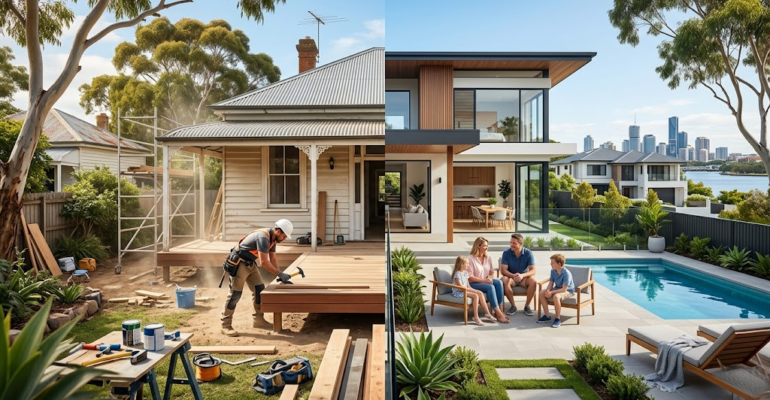
Renovation vs Upgrading in Australia April 2026 — Which Property Move Makes More Financial Sense?
Primary Keyword: Renovation loan Australia 2026
Secondary Keywords: renovate or upgrade house, construction loan Australia, home improvement finance, property strategy April 2026
Introduction
For many Australian homeowners in April 2026, the next property decision is not whether to buy. It is whether to stay and improve or sell and upgrade.
This is a major strategic question. With property prices still elevated in many areas, upgrading can involve higher transaction costs, bigger debt, and stiffer competition for quality homes. At the same time, renovation and construction costs remain meaningful, and not every home can be improved efficiently.
So which option makes more sense? The answer depends on numbers, lifestyle, and loan strategy.
Why More Homeowners Are Considering Renovation
Renovation becomes attractive when homeowners like their location but have outgrown the property. Maybe the family needs another bedroom, a better kitchen, improved layout, or more usable outdoor space. Maybe the home is structurally sound but functionally dated.
In those cases, renovation can be cheaper than moving. It avoids stamp duty, selling fees, and the uncertainty of finding the next home in a competitive market. It also allows owners to keep a location they already know suits their life.
When Upgrading Makes More Sense
Renovation is not always the better option. Sometimes the block, zoning, layout, or structural limitations of the property mean money spent will never fully solve the problem. In other cases, the renovation cost is so high that the owners may be better off directing that capital toward a different home altogether.
Upgrading also makes sense when the current property no longer fits the family’s long-term needs or when a different suburb, school zone, or lifestyle setting is the real goal.
Finance Matters in Both Scenarios
Whether renovating or upgrading, the finance side matters just as much as the design side.
For renovations, borrowers need to understand equity, cash contribution, valuation risk, building costs, contingency margins, and how staged funding works if a construction-style facility is needed. Underestimating the financing side is a common mistake.
For upgrading, the focus shifts to sale timing, bridging risk, deposit recycling, and whether the larger loan remains comfortable in a higher-rate environment.
The Emotional Trap
One of the hardest parts of this decision is that emotion often clouds it. Homeowners may underestimate renovation stress because they love the home. Or they may romanticise upgrading without fully counting transaction costs and debt impact.
That is why a financial model matters. Compare both pathways honestly. What does renovation cost in total? What is the expected post-renovation value? What does upgrading cost after stamp duty and selling fees? How does each option affect long-term cash flow?
Conclusion
In April 2026, renovation and upgrading can both be smart — but only if the numbers and lifestyle outcomes align.
A renovation works well when the location still suits, the improvements add meaningful usability, and the finance structure is sound. An upgrade works well when the current home cannot realistically deliver what the household needs or when long-term value lies elsewhere.
The best property move is not always the biggest one. It is the one that improves your life without damaging your financial flexibility.